

Integrated Developments Can Offer a Different Proposition
Commercial real estate is ultimately about movement.
Businesses need employees to reach them. Retailers need customers. Restaurants need diners. Offices need connectivity. Investors need an ecosystem capable of supporting all of these activities.
This is where Noida and Greater Noida stand out.
Over the years, the two cities have developed into interconnected commercial markets rather than isolated urban centres. Their expanding infrastructure, corporate presence, residential growth and evolving business corridors have created multiple opportunities for commercial real estate.
One of Noida's biggest strengths is its position within the National Capital Region.
Its proximity to Delhi provides access to a large workforce and consumer market, while connections towards Ghaziabad, Greater Noida and other NCR destinations broaden the catchment further.
For companies, this means access to talent and customers. For retailers, it can mean a wider market. For property investors, it creates a stronger foundation for commercial demand.
Noida is not dependent on a single commercial district.
Sectors such as 62 have established themselves as corporate destinations, while the Expressway corridor has developed a newer business environment.
This diversification is important. Different industries can choose different locations depending on their workforce, office requirements and connectivity needs.
It also gives investors more options rather than forcing every commercial requirement into one established market.
Greater Noida brings a different dimension to the story.
Large-scale urban planning allows new commercial districts to develop alongside residential communities and infrastructure.
Greater Noida West, for example, has seen substantial residential expansion. As more people move into these communities, demand for nearby services and commercial destinations naturally increases.
For investors, this creates an important question: can the commercial asset serve the population that is developing around it?
Commercial property rarely succeeds on architecture alone.
Road connectivity, public transport and access to major employment areas influence everyday convenience.
The Noida-Greater Noida Expressway has become an important regional connector, while the wider network provides access towards Delhi and other NCR cities.
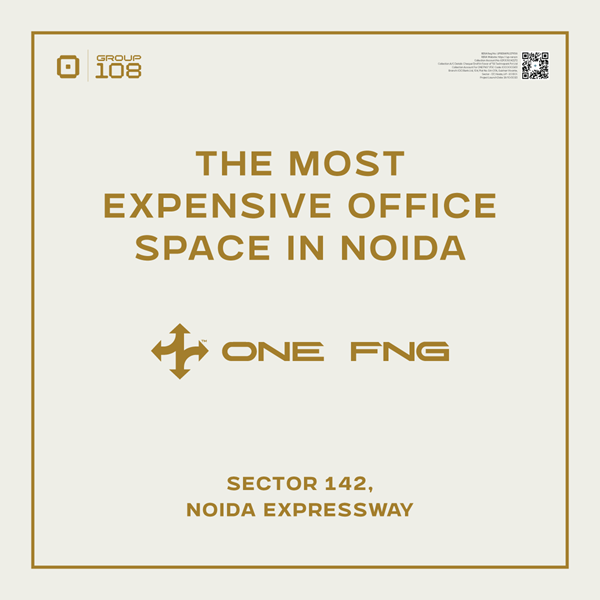
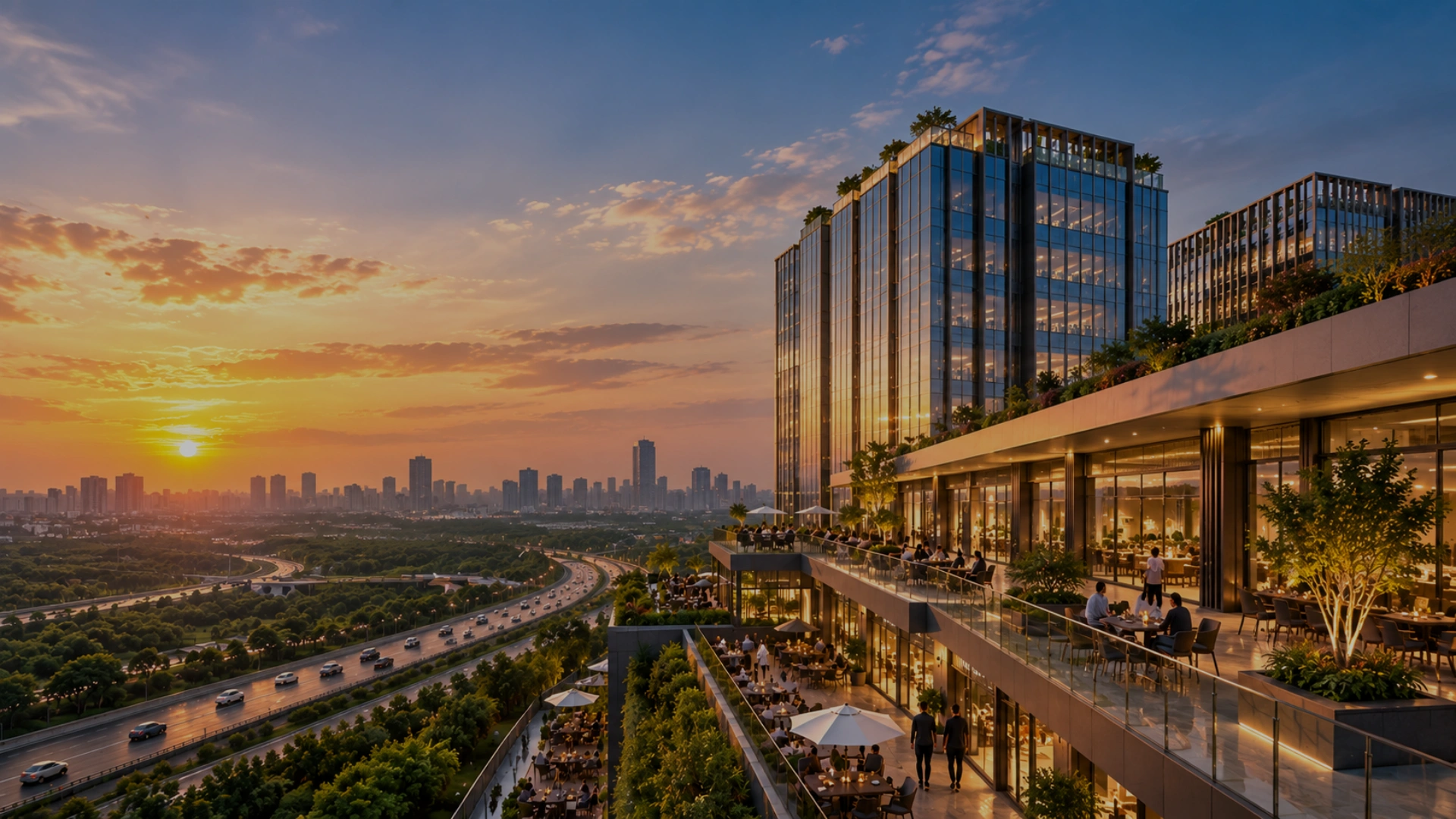
ONE FNG in Sector 142 illustrates the significance of corridor-based connectivity. The project is positioned adjacent to both the FNG and Noida-Greater Noida Expressway and is designed as an office-and-retail destination.
Another change in the market is the shift from standalone commercial buildings to integrated developments.
Modern users increasingly expect more than an office floor or a row of shops. They want dining, convenience, leisure and well-designed public spaces within easy reach.
Projects such as ONE FNG combine contemporary offices with hi-street retail, business facilities, wellness amenities and landscaped areas. The development covers approximately 15 acres in Sector 142.
This integrated approach can make a commercial destination more useful throughout the day.
One of the most important fundamentals for retail is the surrounding population.
When residential communities grow, the need for everyday services grows with them. Cafés, restaurants, supermarkets, clinics, salons, gyms and other businesses require accessible locations.
Noida and Greater Noida's expanding residential landscape therefore supports a wider commercial ecosystem.
For investors, studying residential density and future housing development can be just as important as studying the commercial project itself.
A strong market does not eliminate investment risk.
Buyers should examine project approvals, RERA registration, developer track record, construction status, maintenance charges, financing costs and potential rental demand.
It is also important to understand the difference between a promising location and a promising property. A good sector cannot compensate for poor planning, weak visibility or unsuitable unit configuration.
Noida and Greater Noida have reached an interesting stage in their evolution.
One offers established corporate districts alongside newer business corridors. The other continues to develop large residential and commercial ecosystems.
Together, they represent a market where infrastructure, population and employment are expanding in parallel.
For commercial property investors, that combination is compelling.
The opportunity, however, lies in choosing carefully. Instead of simply asking whether Noida or Greater Noida is a good market, investors should ask a more useful question: which location, asset type and project are best aligned with the demand that is developing around them?
That is where informed investment decisions begin.
Noida and Greater Noida are evolving with purpose, creating new possibilities for businesses and investors alike. Yet, the right opportunity depends on looking beyond headlines and numbers, understanding the surrounding ecosystem, and choosing a property that can remain relevant as the market grows.