

That Corner of Noida That Rewrote the Map Completely!
Commercial real estate is often evaluated after construction is complete. Buyers compare layouts, investors study appreciation potential, and businesses assess connectivity. Yet, the true quality of a commercial project is determined much earlier, during planning, design, execution, and the vision of the developer behind it. Long before the first office opens or the first business moves in, countless decisions shape how that development will perform over the next decade.
This is one of the reasons businesses have become increasingly selective while investing in commercial real estate. Instead of focusing only on visible features, they now pay close attention to the credibility of the developer. A project's long-term value depends as much on who builds it as on where it is built.
Across Noida, commercial activity has expanded alongside improvements in infrastructure and connectivity. As business districts continue to evolve, companies are seeking projects that offer operational efficiency rather than temporary market appeal. This changing approach has naturally increased interest in the top builders in Noida, as experienced developers are often better positioned to deliver projects that remain relevant despite changing business requirements.
A commercial development is rarely judged by its launch. It is judged by how effectively it functions years after completion. Well-managed common areas, efficient circulation, thoughtful layouts, and professional maintenance contribute to an environment where businesses can operate without unnecessary operational challenges. These qualities may not appear in promotional material, but they become increasingly valuable over time.
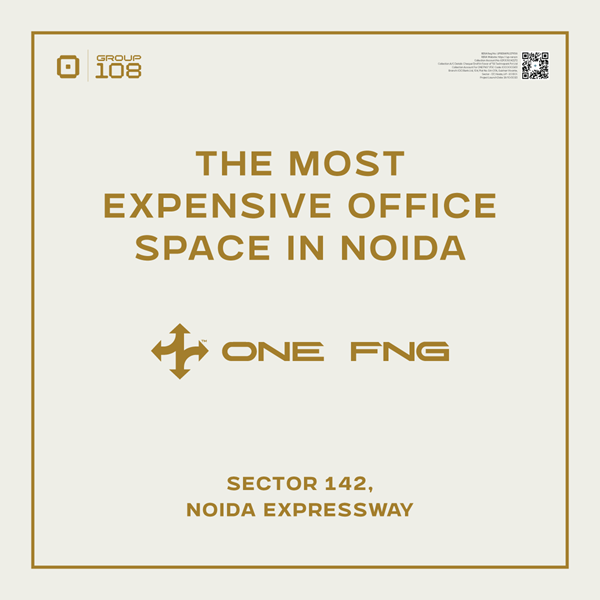
This is where Group 108 has contributed to Noida's evolving commercial landscape. Rather than treating commercial projects as isolated structures, the company has focused on creating developments that align with the changing expectations of businesses, investors, and professionals. That broader approach reflects a growing understanding that commercial real estate should continue supporting business performance long after possession.
For corporate occupiers, selecting an office is no longer only a real estate decision. Workplace accessibility, surrounding infrastructure, commuting convenience, and the overall professional environment now influence operational planning. Organisations understand that a well-located office supports employee productivity, simplifies client visits, and strengthens the company's professional image.
Demand for office space on Noida Expressway reflects this transition. The corridor has steadily established itself as an important commercial destination because it combines strong connectivity with proximity to residential neighbourhoods, educational institutions, and expanding business districts. These factors create an environment where companies can grow without compromising accessibility.
Businesses also recognise that commercial property is a long-term operational asset. Office ownership is expected to support organisational growth for many years, making construction quality, planning standards, and developer reliability equally important. A project that functions efficiently today should remain practical as business models continue evolving.
Developers therefore carry responsibilities that extend beyond construction timelines. Their planning decisions influence visitor movement, parking efficiency, common-area usability, and the overall experience of everyone occupying the development. Projects that address these practical considerations generally perform more consistently than those designed primarily around visual appeal.
Group 108 reflects this practical philosophy by focusing on commercial environments that combine modern infrastructure with business-oriented planning. Rather than emphasising architecture alone, developments are expected to support everyday operational requirements while maintaining long-term relevance within a competitive commercial market.
Investor expectations have also become more sophisticated. Rental potential remains important, but experienced investors increasingly evaluate occupancy prospects, developer credibility, maintenance standards, and future infrastructure development before making purchasing decisions. These considerations help distinguish projects capable of delivering sustained value from those driven primarily by short-term market sentiment.
This broader evaluation explains why the reputation of the top builders in Noida has become an essential part of commercial investment decisions. Businesses and investors alike understand that successful commercial developments are built through careful planning, consistent execution, and an understanding of how workplaces continue evolving.
As commercial activity along the region continues expanding, demand for professionally planned office space on Noida Expressway is expected to remain strong. Organisations are looking beyond immediate requirements and selecting workplaces capable of supporting long-term operational objectives.
Commercial real estate ultimately reflects the quality of decisions made long before construction begins. Thoughtful planning, responsible execution, and a clear understanding of business needs often determine whether a project continues performing well years into the future. In that respect, Group 108 represents an approach that recognises commercial development as a long-term commitment rather than a short-term opportunity, contributing meaningfully to the ongoing evolution of Noida's business landscape. Thoughtful development creates business environments that remain relevant, reliable, and valuable long after construction is complete.