

The Making of a Place People Actually Use!
A commercial property can look impressive on paper and still fail to deliver the returns an investor expects.
That is why identifying a potentially high-return commercial investment in Noida requires more than comparing prices. The real work lies in understanding demand, location, property usability, tenant potential and the long-term direction of the surrounding area.
A disciplined approach can help investors separate genuine opportunities from properties that simply have attractive marketing.
The first question should be simple: Why would people come here?
For offices, accessibility for employees and clients matters. For retail, visibility and consumer movement become more important.
Locations connected to major roads, employment hubs and residential catchments can have an advantage because they serve more than one type of user.
Sector 142 is an example of a location where several connectivity factors come together. ONE FNG is positioned alongside the FNG and Noida-Greater Noida Expressway and close to the wider corporate corridor.
A high-return property is ultimately dependent on demand.
Before investing, identify who is expected to occupy or use the property.
If it is an office unit, research the companies and industries active in the surrounding business district. If it is retail, examine the residential population, existing businesses and customer profile.
Don't rely only on projected footfall figures. Visit the location yourself and observe the area.
For retail investment, visibility can make an enormous difference.
A shop facing a major movement corridor may have a different commercial proposition from one hidden inside a building.
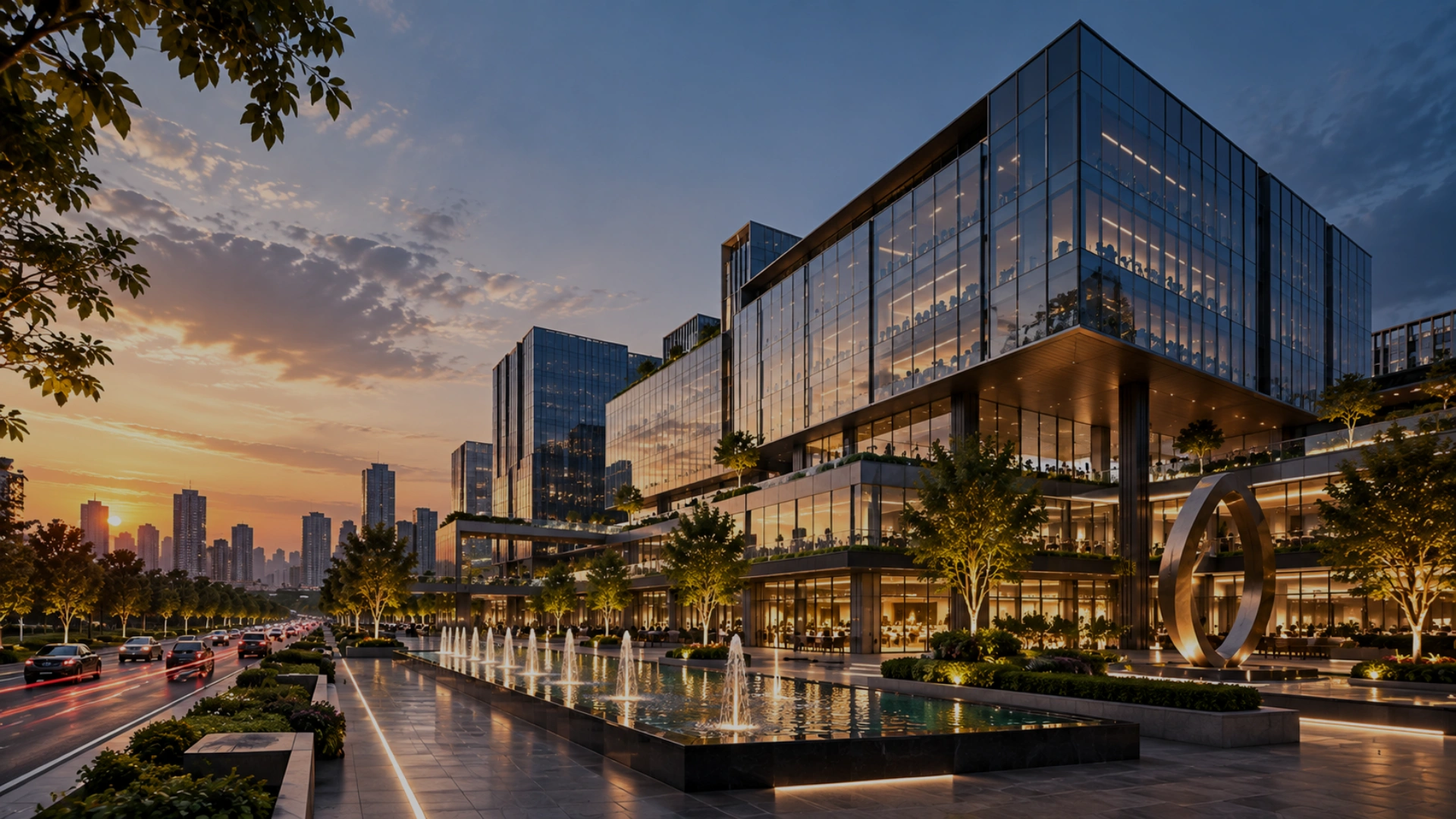
ONE FNG's retail planning, for example, places retail spaces around tower entrances, the plaza and FNG access points, while its hi-street retail comprises five blocks.
Investors should examine frontage, entry points, pedestrian movement, signage opportunities and surrounding circulation before purchasing.
A commercial unit is part of a larger building.
Ask whether the development offers the infrastructure today's businesses expect.
For office investments, look at floor efficiency, lift capacity, parking, service access, common areas and business-support facilities.
ONE FNG's official specifications include approximately 62.5% office efficiency, 21 high-speed elevators, multilevel parking and dedicated office and retail entrances.
These details may appear technical, but they affect everyday usability.
Never calculate returns using rent alone.
Consider the total acquisition cost, registration, taxes, maintenance, financing expenses and possible vacancy.
Then estimate the realistic rental income rather than the highest rent someone has quoted.
A property promising a high theoretical yield may become much less attractive once operating costs and vacancy are included.
Growth can create opportunity, but it can also create competition.
Before buying, study what other commercial developments are planned nearby. A new project may increase the area's overall attractiveness, but it could also introduce competing shops or offices.
The objective is not to avoid competition completely. It is to understand whether the market can support the supply being created.
Due diligence should never be skipped.
Check RERA registration, approvals, title-related documentation, construction status and the developer's track record.
Buyers should also understand the exact terms of the sale agreement and payment plan before committing capital.
An investment should not be evaluated only on today's rental opportunity.
Ask yourself who might buy the property from you in the future.
Assets with practical layouts, strong locations, established surrounding infrastructure and broad user appeal may have a wider potential resale audience.
This is particularly relevant when investing in commercial real estate for the long term.
ONE FNG in Sector 142 combines several characteristics investors commonly examine: strategic connectivity, office and retail uses, large-scale planning and supporting amenities.
The development spans approximately 15 acres and includes office spaces as well as hi-street and tower retail. Its location is adjacent to major expressway corridors and near established commercial and residential sectors.
That does not guarantee returns, and no commercial property can honestly make that promise.
What it demonstrates, however, is how investors can evaluate an opportunity through fundamentals rather than slogans.
High-return commercial real estate is rarely about finding a magical property.
It is about finding a property where location, demand, usability, pricing and future relevance make sense together.
Investors who take the time to investigate these factors are better positioned to make decisions based on evidence rather than excitement.
In Noida's rapidly changing commercial market, that distinction can make all the difference.